
Which blood pressure number matters more, top or bottom?
Both numbers matter. A high top or bottom number can put a reading above the threshold, so keep the pair together in every diary entry.
Updated 3 min read
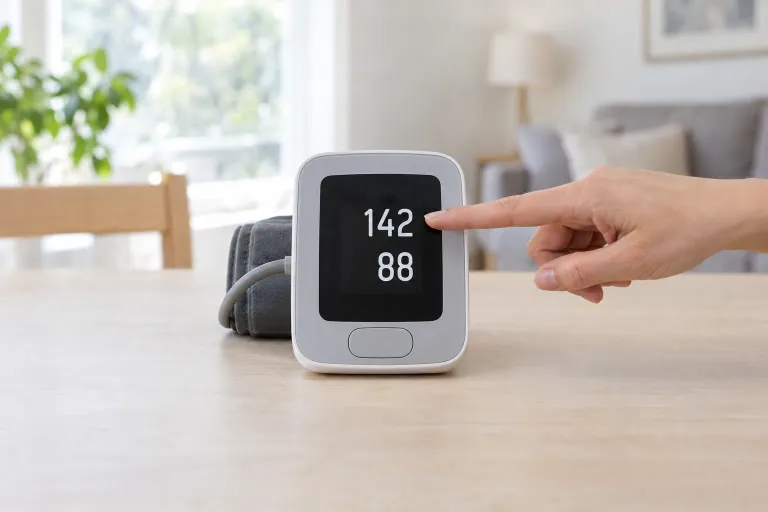
Neither blood pressure number can be ignored. The top number is systolic pressure and the bottom number is diastolic pressure. A reading can be above a threshold because either value is high. That is why 140/70 and 128/92 both need attention even though one half of each pair is below the clinic threshold.
What the top and bottom numbers mean
The NHS blood pressure guide explains that systolic pressure is the pressure when the heart pushes blood out. Diastolic pressure is the pressure when the heart rests between beats.
Both are measured in millimetres of mercury, written as mmHg. Say the pair together and record it together. Writing down only the number that looks unusual removes half of the information your GP needs.
Can one number make a reading high?
Yes. The NHS says blood pressure is usually considered high at 140/90 mmHg or higher when checked by a healthcare professional, or 135/85 mmHg or higher when checked at home. In each pair, reaching the top or bottom threshold is enough to cross the line.
That means:
- 140/70 reaches the clinic systolic threshold
- 128/92 reaches the clinic diastolic threshold
- 136/82 reaches the home systolic threshold
- 130/86 reaches the home diastolic threshold
These examples show how a threshold works. They do not diagnose high blood pressure from one reading. NICE NG136 normally confirms a diagnosis by combining a clinic result with an average from home monitoring or a 24-hour ambulatory monitor.
Is 140 over 70 normal for an older adult?
It is still at the clinic threshold. A lower bottom number does not cancel the top one, and age does not give an adult a separate diagnostic range. The British Heart Foundation explains that arteries can stiffen with age, which can contribute to higher blood pressure. More common does not mean automatically healthy.
Age may affect a treatment target once a clinician has diagnosed hypertension. That is a different question from whether a reading crosses a diagnostic threshold. Normal blood pressure by age explains that distinction.
What if only the bottom number is high?
Keep it. A diastolic value of 90 or higher in a clinic, or 85 or higher in a home average, is not a minor detail just because the systolic value looks ordinary. Record the full pair and let a consistent series show whether the pattern repeats.
BP Diary can also display the 2024 European Society of Cardiology ranges. That reference has a lower category boundary at 120/70, but its home hypertension threshold is still 135/85. Always check which reference system is shown before comparing labels from different sites or apps.
What to do with an unexpected reading
Stay seated, check that the cuff fits and repeat the measurement after a short rest. Keep both results. One reading is a moment; a diary shows whether the change persists.
For a home series, NICE recommends two seated readings at least one minute apart, morning and evening, for at least four days and ideally seven. Leave out the first day and average the rest. The average blood pressure calculator does the arithmetic, while the printable blood pressure diary gives you a paper version.
If a very high result remains after a careful repeat and you have no emergency symptoms, contact your GP surgery or NHS 111 for advice. The NHS high blood pressure page gives the local routes for urgent help. Call 999 for a life-threatening emergency such as chest pain that does not go away, severe difficulty breathing or signs of stroke. Do not delay help to finish a diary entry.
BP Diary keeps both pressure numbers, pulse, time and notes in one record. It can show a history and create a report, but it does not diagnose a condition. Discuss repeated high readings with your GP or another healthcare professional.