
Low blood pressure: what to record and when to see a GP
A reading below 90/60 is considered low, but the number is only part of the picture. Symptoms, timing and changes in position help your GP understand what is happening.
Updated 3 min read
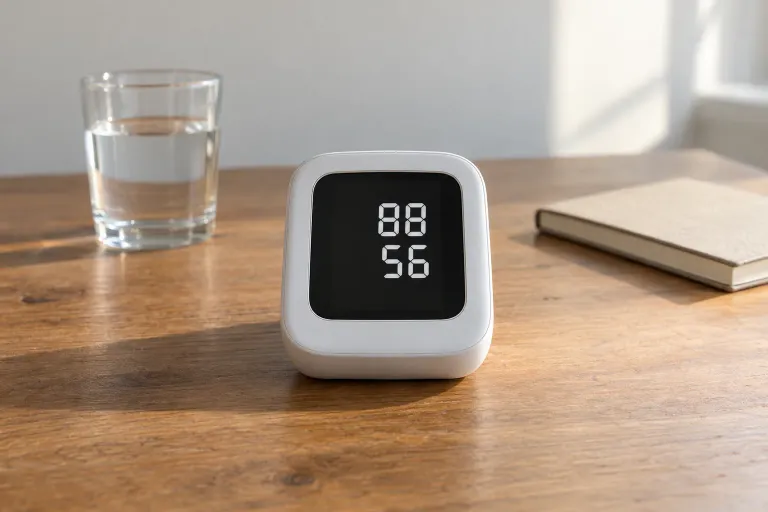
The NHS describes blood pressure below 90/60 mmHg as low. Some people have readings around that level without feeling unwell. For others, dizziness, blurred vision, weakness, confusion or fainting make the reading worth discussing with a GP.
The useful question is not simply, “Was the number low?” It is, “What was happening when it was low?” A diary can keep the reading, symptom and time together so that you do not have to reconstruct the pattern at an appointment.
What counts as low blood pressure
Blood pressure has two numbers. A reading is below the NHS low-pressure line when the top number is under 90 or the bottom number is under 60. This is different from the thresholds used to assess high blood pressure.
Do not use a high blood pressure category to decide whether a low result is harmless. The blood pressure calculator explains the high end of the range. Repeated low readings, particularly with symptoms, need their own conversation with a healthcare professional.
One result can be affected by posture, recent activity, cuff fit and the way the measurement was taken. If you feel well, stay seated, check the cuff and repeat the measurement after a short rest. Keep both readings rather than deleting the lower one.
Symptoms to record
The NHS lists light-headedness or dizziness, feeling sick, blurred vision, weakness, confusion and fainting among the symptoms of low blood pressure. If you keep getting symptoms like these, the NHS advises seeing a GP.
Write down what you felt in plain language. “Dizzy for about a minute after standing up” is more useful than “felt odd”. Include the time and what you had just been doing. If you needed to sit or lie down, record that too.
Your safety comes before the diary. If you feel faint, sit or lie down rather than staying upright to take another reading. Use NHS 111 when you need urgent advice and are not sure what to do. The NHS 999 guide says to call 999 for a life-threatening emergency, such as loss of consciousness with abnormal breathing, severe difficulty breathing or chest pain that does not go away.
When standing up brings on symptoms
Symptoms that appear after standing may be linked to postural hypotension. The NHS recommends getting up slowly and taking care when moving from lying to sitting and then standing.
A clinician can check the pattern in a controlled way. NICE NG136 says to measure blood pressure while the person is lying down, then again after they have been standing for at least one minute. A fall of 20 mmHg or more in systolic pressure, or 10 mmHg or more in diastolic pressure, guides the clinician’s next steps. That is a clinical assessment, not a test to attempt alone if standing makes you unsteady.
What to put in your diary
For each episode, record:
- both blood pressure numbers and your pulse
- the date and time
- whether you were sitting, lying or had just stood up
- any dizziness, blurred vision, weakness, confusion or fainting
- anything unusual about the measurement, such as taking it just after walking upstairs
A row such as “86/54 at 07:40, dizzy for one minute after getting out of bed” gives a GP more context than 86/54 on its own. The printable blood pressure diary has a notes column, and how to keep a blood pressure diary explains how to record a consistent series.
BP Diary keeps each cuff reading with its time, pulse and note. You can choose a date range and print or share a report for an appointment. Ask your GP surgery how it prefers to receive home readings.
When to contact your GP
Speak to your GP if low-pressure symptoms keep returning, if you faint, or if the pattern is new for you. Bring the diary so the practice can see whether symptoms happen at a particular time or after a change in position.
Do not change prescribed treatment because of an app category or a single home reading. A GP or another healthcare professional can consider the readings alongside your symptoms and medical history.