
How to keep a blood pressure diary for your GP appointment
Record both readings, their time and your pulse. For a NICE home series, measure morning and evening for up to seven days.
Updated 4 min read
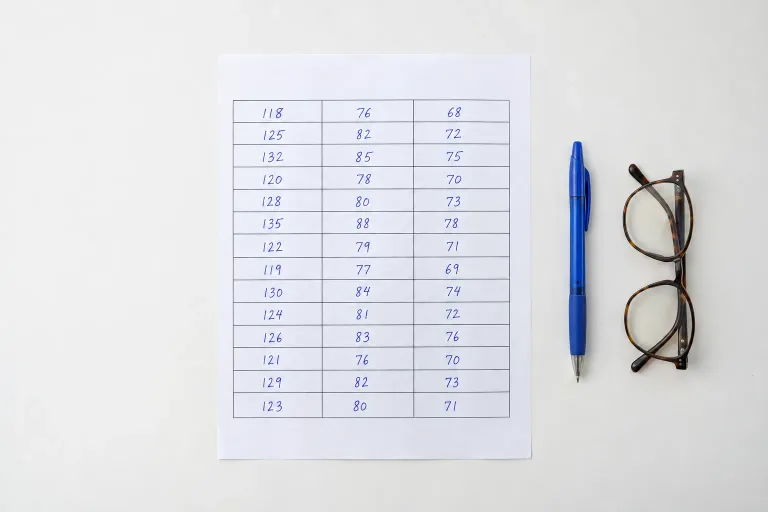
Write down every reading with its date, time, systolic pressure, diastolic pressure and pulse. When your clinician asks for a NICE home series, measure in the morning and evening, take two readings at least one minute apart and keep them all. The average comes from the series, not from choosing the lowest result.
What to write in each line
One line is one reading: date, time, systolic, diastolic and heart rate. Add a short note only when it helps explain the context, such as a poor night’s sleep, pain or taking the measurement soon after climbing the stairs.
The BIHS home blood pressure diary uses at least two readings one minute apart, morning and evening, for seven days. Both readings belong in the diary. The printable blood pressure diary has a line for each one.
How many readings make a log
NICE NG136 sets the routine GPs use to confirm high blood pressure at home: two consecutive readings at least one minute apart, seated, recorded twice a day, ideally in the morning and the evening, for at least four days and ideally seven. That is 28 readings over a full week, or 16 over the shortest week NICE accepts.
Take them at roughly the same times each day. A diary that mixes a quiet morning result with one taken after rushing home is harder to compare. How to check blood pressure at home covers the routine around each reading.
Why the first day does not count
NICE NG136 excludes the first day’s readings when the remaining home results are averaged to confirm high blood pressure. Keep day one in your diary so the record is complete, then leave it out only for this calculation. Do not assume every clinical use of the diary follows the same rule.
What the average means
Average the systolic numbers and the diastolic numbers separately, days two to seven. The average blood pressure calculator does the arithmetic and names the range.
NICE NG136 confirms hypertension when a reading at the GP surgery of 140/90 or higher meets a home average of 135/85 or higher, or the daytime average from a 24-hour monitor at the same level; the NHS gives the same two numbers. ESC 2024, the European guideline, draws the home line at the same 135/85 and calls a reading below 120/70 non-elevated. That is why a consistent series matters more than one number. For a single reading, the blood pressure calculator shows the range and the next step.
A single reading does not confirm a diagnosis. Stay seated, check your position, take the second reading and record both. Seek help according to your symptoms and the advice your clinician has given you.
Paper, spreadsheet or app
A printed sheet works for one week. It fits the columns the GP reads, it goes in a bag, and it needs nothing but a pen. Print the blood pressure log as a page or download it as a PDF.
A spreadsheet can hold a longer history, but it still needs a separate column for each value and a clear date and time. Check any average formula before relying on it, especially if the first day needs to be excluded for a NICE home series.
BP Diary keeps your readings with their date, time and notes. Photograph your monitor’s display and check the numbers, or type them yourself. Choose a period to see averages and print or share a report with your GP.
Bringing the log to the appointment
Bring the paper diary or the app’s report in a form you can open without a connection. NHS England describes home monitoring as a way to measure and share readings with a GP. Ask your practice how it prefers to receive them rather than assuming one file format is accepted everywhere.
If you are unsure about your monitor or technique, ask whether the practice wants you to bring the device. Do not turn up with equipment without checking first. Make a note of the model and the cuff size in either case.
Keep the diary for as long as your clinician asks. A continuous record can show whether a change persists, while selected dates let you prepare a focused report for an appointment.