
How to check your blood pressure at home
Use a validated upper-arm monitor, rest for five minutes and take two seated readings at least one minute apart.
Updated 3 min read
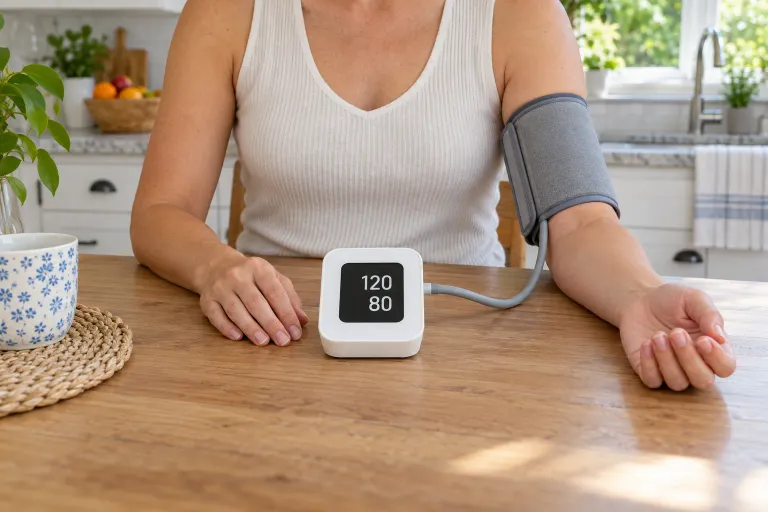
Sit quietly for five minutes. Rest your bare upper arm on a table at heart level, keep both feet flat and do not talk. Take two readings at least one minute apart and record both. If you are collecting a home series, NICE uses morning and evening readings for at least four days and ideally seven.
Which cuff
Choose an automatic upper-arm monitor that has been validated for accuracy. The British and Irish Hypertension Society maintains the UK validated-monitor list, while the British Heart Foundation explains what to check before buying.
Fit comes before extra features. Measure around your upper arm and choose a cuff whose printed range includes that measurement. NICE NG136 also requires an appropriate cuff size in clinical measurements.
Before you press start
Avoid taking a reading immediately after exercise, caffeine or smoking. Empty your bladder if you need to, then sit quietly for at least five minutes. The BIHS home diary asks for feet flat, the arm supported at heart level and no talking during the measurement.
How to sit
Sit with your back supported and your legs uncrossed. Put both feet flat on the floor. Rest your arm on a table so the cuff is level with your heart, and fit it to bare skin as the manufacturer shows. Stay still and silent until the monitor has finished.
Which arm, and why the arms differ
Use the arm your clinician has advised, then keep using the same one so the diary compares like with like.
A difference does happen. NICE NG136 tells GPs to measure both arms when they consider a diagnosis, to repeat when the readings differ by more than 15 mmHg, and when the gap stays above 15 on the second measurement, to take every later reading on the arm with the higher number. If you notice such a gap at home, mention it at the appointment and use the higher arm from then on.
When to take the readings
Morning and evening, at roughly the same times each day, is the NICE routine for confirming high blood pressure at home. Each time, take two readings at least one minute apart and record both. The second is not a correction of the first.
How many days
At least four days, ideally seven, says NICE NG136. The first day’s readings are left out before the remaining systolic and diastolic readings are averaged separately. A full seven-day diary contains 28 readings before day one is excluded. The average blood pressure calculator can do that arithmetic.
At home, NICE NG136 and the NHS use an average of 135/85 mmHg or higher when confirming high blood pressure. ESC 2024, the European reference available in BP Diary, uses the same home threshold. A category is not a diagnosis or a personal treatment target.
What to do with a high reading
Stay seated, check the cuff and take the second reading. If a very high result remains after a careful repeat and you have no emergency symptoms, contact your GP surgery or use NHS 111 for advice. Call 999 for signs of a life-threatening emergency such as chest pain that does not go away, severe shortness of breath or signs of stroke. The NHS high blood pressure page gives the UK routes for urgent help.
Do not delete a result simply because it is higher than expected. Record the repeat and any useful context, then follow the plan agreed with your clinician.
Writing it down
Both readings, the time, the pulse, and a note when something was unusual. A page with those columns is enough for a week; the printable blood pressure log has them laid out with the measuring rules printed underneath. How to keep a blood pressure log explains how the GP reads it.
In BP Diary, photograph your monitor’s display and check the numbers, or enter them yourself. Keep the time and any notes with each reading, then follow your history or share a report with your GP.