
Blood pressure cuff sizes: measure your arm before you buy
Measure around the middle of your upper arm, then choose a validated monitor with a cuff range that includes that number.
Updated 3 min read
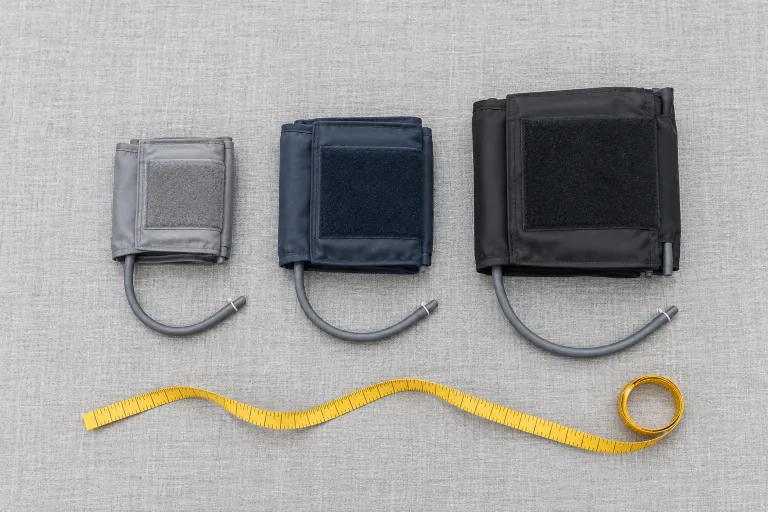
Measure around the middle of your upper arm with a tape, then check that number against the range printed on the cuff or in the monitor’s instructions. Size names are not standard between manufacturers. The centimetre range for the cuff you will actually use matters more than the words small, medium or large.
How to measure your arm
Bare the upper arm and let it hang relaxed at your side. Put a tape measure around the midpoint, halfway between the point of the shoulder and the point of the elbow. Keep the tape level and close to the skin without pulling it tight.
Write the number down. It changes slowly, and it is the only piece of information you need to buy the right cuff.
The chart
| Cuff size | Arm circumference |
|---|---|
| Small adult | 22 to 26 cm |
| Adult | 27 to 34 cm |
| Large adult | 35 to 44 cm |
| Extra-large adult | 45 to 52 cm |
These are illustrative adult sizes from an American Heart Association measurement statement, not a UK shopping standard. Manufacturers divide their ranges differently. If your cuff or its instructions show another range, use the information supplied for that model.
Behind the table is a rule rather than a set of products: the cuff’s bladder should be 75 to 100% as long as your arm’s circumference, and 37 to 50% as wide.
What a wrong size does to your readings
It can move the result in a predictable direction. A cuff that is too small can make a reading higher than it should be, while one that is too large can make it lower.
If your arm is 38 cm and the cuff is labelled for arms up to 34 cm, it is not the right cuff for you. Repeating the reading or calculating an average will not correct a consistent fitting error. The blood pressure calculator can classify the numbers you enter, but it cannot tell whether the cuff fitted properly.
When you are between sizes
Do not decide from the size name alone. If your arm sits on the boundary, check the exact range and the monitor manufacturer’s instructions. Some brands offer a wide-range cuff; others use separate standard and large cuffs.
Wearing it right
Put the cuff on bare skin. Avoid a tightly rolled sleeve above it. Sit with your back supported, feet flat and arm resting at heart level. Follow the placement marks on your own cuff, because the tube and artery marker are not identical on every model. How to check blood pressure at home has the full routine.
Note the cuff and the arm you use at the top of your log, so nobody has to guess later. The printable blood pressure log has a line for exactly that.
Choosing a monitor in the UK
Choose an automatic upper-arm monitor that has been validated for accuracy. The British and Irish Hypertension Society maintains a UK list of validated monitors and makes clear that the list does not rank price, availability or extra features. Check the cuff range separately before buying.
The British Heart Foundation also recommends a BIHS-validated monitor and a cuff that fits. If you are unsure how to fit it, ask a practice nurse, GP or pharmacist whether they can check your technique. Availability varies, so ask before taking a monitor to an appointment.
BP Diary records readings from your monitor. Photograph the display and check the numbers, or enter them yourself. If you also use camera estimates, calibrate them with your cuff and confirm important readings with it.