
What the pulse number on your blood pressure monitor means
The third number on a blood pressure monitor is your pulse rate, not another blood pressure value. Record it beside the reading so changes have a time and context.
Updated 3 min read
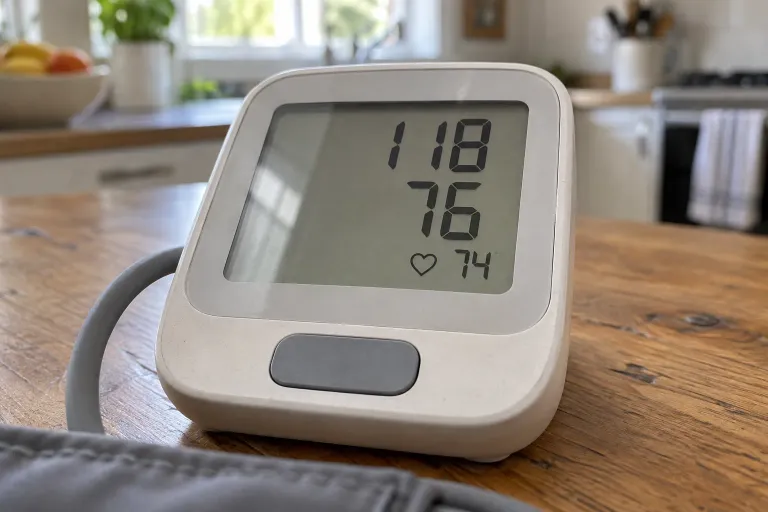
Many home monitors show three values: systolic pressure, diastolic pressure and pulse. The pulse value is your heart rate in beats per minute. It tells you how often your heart was beating while the monitor took the reading. It does not change the blood pressure category and it should not replace either blood pressure number in your diary.
Pulse and blood pressure are different
Blood pressure describes the force of blood against artery walls. Pulse describes how often the heart beats. The two can change together, but they do not have to. You can have a faster pulse without high blood pressure, or a slower pulse alongside a high reading.
Use the blood pressure calculator for systolic and diastolic pressure. Treat pulse as a separate piece of context and save it in its own column.
What counts as a resting pulse
The British Heart Foundation says most adults have a resting heart rate between 60 and 100 beats per minute. “Resting” matters. Sit or lie quietly for about five minutes before checking it, and make sure you feel calm and comfortable.
A pulse taken just after climbing stairs, rushing for a bus or feeling frightened is not a resting pulse. Record the context if you keep it. When checking blood pressure at home, use the same quiet routine for each session so that readings are easier to compare. The British and Irish Hypertension Society diary instructions recommend five minutes of rest, feet flat on the floor, the arm supported at heart level and no talking during the measurement. How to check blood pressure at home explains the full routine.
Check an unusual monitor result by hand
If the monitor shows a pulse that seems unusual for you, stay seated and check again after resting. You can also feel your pulse at your wrist. The British Heart Foundation’s pulse guide explains how to count beats for 30 seconds and double the result. If the rhythm feels irregular, count for the full 60 seconds instead.
The monitor’s pulse display is useful for a diary, but it is not a diagnosis of a heart rhythm problem. Some monitors also show an irregular-heartbeat symbol. Check the instructions for your model to understand what that symbol means and discuss repeated alerts with a healthcare professional.
What to record
Keep the pulse beside the blood pressure reading, date and time. Add a short note when the circumstances were different from usual. For example:
07:30, 128/78, pulse 68, rested for five minutes18:10, 132/80, pulse 96, just walked home21:00, 124/76, pulse 72, rhythm felt uneven when checked by hand
The printable blood pressure diary includes a heart-rate column. BP Diary stores pulse with each cuff reading and can include it in a report. The average blood pressure calculator can average entered pulse values separately from systolic and diastolic pressure.
An average does not make an unusual symptom less important. Notes help your GP see whether a faster or slower pulse happened at rest, after activity or at the same time as dizziness.
When to speak to your GP
The British Heart Foundation advises speaking to your GP if your resting heart rate is consistently above 100 or below 60 and this is not usual for you. It also recommends seeking advice if you have an irregular heart rate or symptoms such as dizziness, fainting or shortness of breath.
Use NHS 111 if you need urgent advice and are not sure what to do. The NHS 999 guide says to call 999 for a life-threatening emergency, including chest pain that does not go away, severe difficulty breathing or loss of consciousness. Do not delay urgent help to take another reading or complete the diary.