
Can you check blood pressure without a cuff?
A guide to pulse checks, phone estimates, wrist devices, and where to get a cuff measurement.
Updated 3 min read
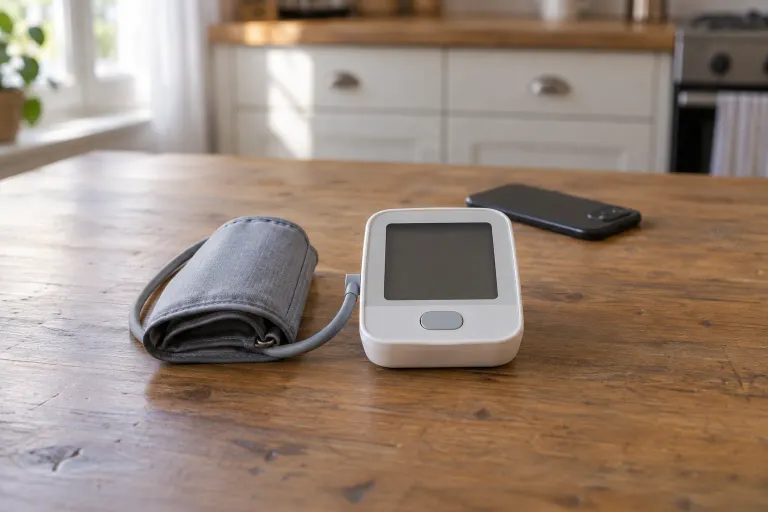
No pulse check or phone-only method reliably replaces a cuff for a home blood pressure reading. The American Heart Association recommends an automatic, validated upper-arm cuff monitor. A camera result is an indirect estimate, not a cuff measurement, according to the AHA’s current cuffless-device statement. BP Diary can record a reading from your monitor and save a camera estimate separately.
Why a pulse check cannot measure blood pressure
Feeling your pulse tells you your heart rate, not your blood pressure. The American Heart Association explains that heart rate counts beats per minute, while blood pressure is the force of blood moving through your vessels. A pulse check at your wrist therefore does not produce the two pressure values that a cuff measurement provides. The AHA’s 2019 measurement statement identifies the upper arm as the standard measurement site.
What the research says about phone apps
The 2019 AHA measurement statement reported that most smartphone blood pressure techniques had not been validated. The mobile methods studied at that time had also performed poorly against oscillometric cuff readings. Those findings apply to the techniques reviewed in 2019.
The AHA’s 2025 cuffless-device statement says cuffless devices estimate blood pressure indirectly. The 2025 AHA/ACC guideline recommends against using cuffless devices for hypertension diagnosis or management until they show greater precision and reliability.
Wrist and finger devices
The AHA does not recommend wrist or finger monitors for home use because their readings are less reliable, although validated wrist devices exist and can be difficult to use correctly. The 2019 AHA statement describes practical challenges in obtaining an accurate wrist measurement.
What a calibrated camera estimate is
BP Diary can save a blood pressure estimate from your phone’s camera. Calibration uses a cuff reading before and after the camera scan to personalize the estimate. The result remains an estimate and does not become a cuff measurement. You can also photograph your monitor display or enter the numbers manually.
Not a medical device. It does not diagnose, treat, cure or prevent any condition.
Camera readings are estimates powered by Shen’s face scan technology. Calibrate them against your cuff and confirm important readings with a cuff.
Talk to your doctor about your readings.
If you have no cuff at all today
The NHS says sudden chest pain that does not go away requires emergency help, so do not wait for a blood pressure number. Contact the emergency service where you are.
If this is not an emergency, ask a local pharmacy or clinic whether a cuff check is available and what it costs. In the UK, the NHS tells people to ask a pharmacy or GP surgery for a blood pressure check. Services differ by location, so ask locally.
Once you have a cuff result, use the blood pressure calculator to check its range. Then follow the advice from the service that took the reading or your local urgent-care guidance. For repeated home checks, the AHA recommends a validated automatic upper-arm monitor.
What a clinician may use
For adults in the UK, NICE NG136 says the clinic reading is repeated during the appointment when systolic pressure is 140 mmHg or higher or diastolic pressure is 90 mmHg or higher. When systolic pressure is at least 140 or diastolic pressure is at least 90, while systolic pressure remains below 180 and diastolic pressure remains below 120 mmHg, the normal next step is ambulatory blood pressure monitoring during the person’s usual waking hours. NICE uses home blood pressure monitoring when ambulatory monitoring is unsuitable or cannot be tolerated.
Under the same UK NICE guidance for adults, hypertension is confirmed only when both settings meet their condition: clinic systolic pressure is 140 mmHg or higher or clinic diastolic pressure is 90 mmHg or higher, and the daytime ambulatory or home average has systolic pressure of 135 mmHg or higher or diastolic pressure of 85 mmHg or higher.
The printable blood pressure log provides a place for cuff readings, and the average blood pressure calculator calculates their average. How to check blood pressure at home explains the routine for each cuff reading. Use the schedule and measurement method your clinician gives you.