
The pulse number on your blood pressure monitor, and what it tells you
The third number is your heart rate, a separate measurement from the two above it. What a resting pulse of 60 to 100 means, when a slower or faster one matters, and where the pulse belongs in your log.
Updated 3 min read
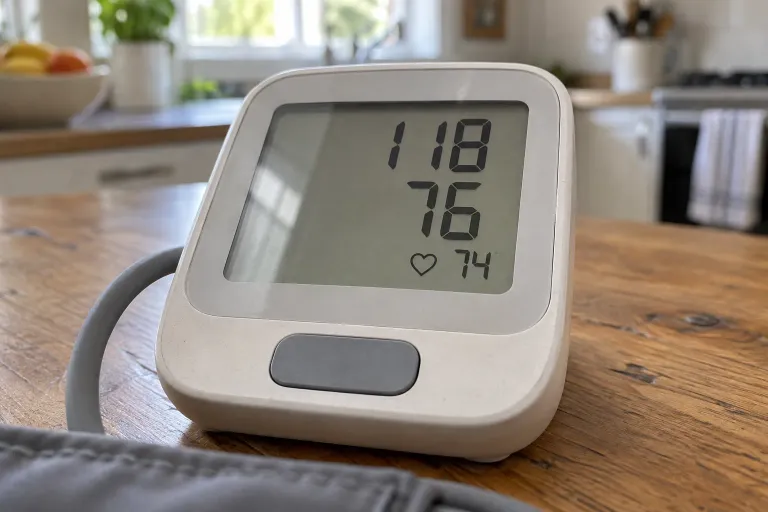
The third number on the display is your pulse: how many times your heart beat in a minute while the cuff was inflated. It is a separate measurement from the two above it, a resting pulse usually sits between 60 and 100, and it belongs in the log beside the reading rather than instead of it.
Pulse is not blood pressure
The American Heart Association separates them in two sentences: “Your blood pressure is the force of your blood while moving through your vessels” and “your heart rate is the number of times your heart beats per minute”.
Force and frequency. A high pulse is not high blood pressure, and it does not change which range your reading falls in. For that, use the blood pressure calculator.
What the resting range means
The American Heart Association describes a normal resting heart rate as 60 to 100 beats per minute when you are sitting or lying, calm and feeling well.
Every word in that condition matters. The pulse your cuff shows counts as resting only if you followed the same preparation the reading needs: five minutes seated and quiet, no talking, no caffeine, smoking or exercise in the previous 30 minutes. Measured two minutes after the stairs, a pulse of 105 says something about the stairs. How to check blood pressure at home has the routine.
Under 60 and over 100
Neither is automatically a problem. Below 60, the AHA notes that a heart rate under 60 “doesn’t always signal a medical problem”. What matters is whether the value is unusual for you and whether it comes with symptoms.
Above 100, the AHA is just as careful: “a high heart rate isn’t always a sign of a problem”. Standing up nudges it, and so do stress, anxiety, pain, heat and exercise. What matters is whether it is unusual for you, and whether it comes with symptoms.
Where the pulse belongs in your log
In its own column, next to the two numbers and the time. That way the doctor sees the three together, and a run of unusually slow or fast readings has a date attached to it.
The printable blood pressure log has a Heart rate (HR) column for morning and evening. The average blood pressure calculator averages systolic and diastolic pressure, and any heart rate values you enter. The time and any note you add help preserve the context around an unusual value.
BP Diary stores heart rate with each cuff reading and its time, lets you add a note when something was unusual, and prints all of it in the report.
When to mention it
Tell your doctor if your heart rate has been beating slower or faster than usual, especially alongside feeling weak, dizzy or close to fainting. That is the AHA’s own instruction, and a log with dates makes the conversation short.
Call emergency services if your heart rate is suddenly very high or very low for you and comes with chest pain, shortness of breath, dizziness, fainting or other signs that something is not right.